Manufacturing FDI surges 29% as China+1 strategy drives investment wave, with industrial estate absorption reaching 1,170 hectares in 2024.
02 March 2026
Insight
02 March 2026
China+1 strategy transforms Thailand's industrial future
Categories:
Authors
Witchaya Wipusanawan
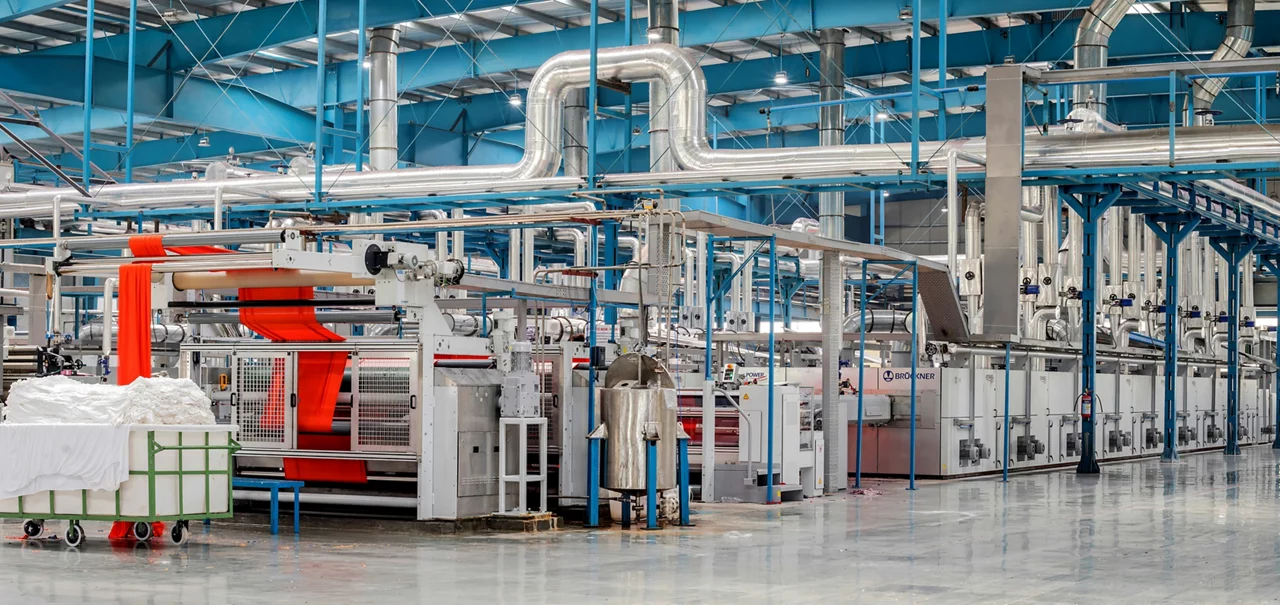
Thailand's weak economic recovery post-pandemic has raised concerns, but manufacturing investment reveals a different story. Since borders reopened post-COVID-19, the kingdom has become a prime beneficiary of the China+1 diversification strategy, transforming its industrial landscape dramatically. Industrial estate absorption has soared to over 1,170 hectares in 2024, nearly triple the 2019 figure.
Investment shifts
To understand these shifts, we compared annual average manufacturing FDI netflows between 2017-2019 (pre-pandemic) and 2022-2024 (post-pandemic). Thailand's manufacturing foreign direct investment has grown from USD 3.9 billion to USD 5.1 billion between these periods, a 29% increase driven by shifting regional investment patterns. China now dominates, investing additional USD 917 million annually and accounting for 44% of total manufacturing FDI in 2024.
Singapore and Hong Kong follow with USD 478 million and USD 496 million, respectively. Meanwhile, Japan, which is historically one of the Thailand's largest manufacturing investors, has retreated, cutting investments by USD 1.5 billion annually.
Figure 1: FDI Netflow change by country, annual average of 2017-2019 vs 2022-2024 (USD millions)

Source: Bank of Thailand, analysis by JLL, Q1 2026Tech and food lead the way
Computer and electronics manufacturing leads with 68% growth compared to pre-pandemic averages, driven by investors from Singapore, the Netherlands, Taiwan, US and China. Food production has expanded eight-fold, led by ASEAN countries and the U.S. Electrical equipment rounds out the top three with 70% growth, attracting USD 859 million annually from Singapore, Japan, China and Hong Kong.
Smaller sectors are posting impressive percentage gains despite modest absolute volumes. Furniture investment has nearly tripled (185% growth), while pharmaceuticals jumped 171%, suggesting diversification beyond Thailand's traditional manufacturing base.
The automotive sector presents a contrasting picture. Though traditionally important, investment has declined by 30% between the two periods. This reflects a technological shift as Chinese firms increasingly invest in electric vehicle production while traditional automakers reassess strategies. Japanese automotive investment reversed from a USD 353 million net inflow to a USD 115 million net outflow annually, while Chinese investment grew 35%.
Figure 2: Sectoral breakdown of FDI changes, 2017-2019 vs 2022-2024 (USD millions)

Source: Bank of Thailand, analysis by JLL, Q1 2026
Figure 3: Sectoral of FDI changes by country, 2017-2019 vs 2022-2024

Source: Bank of Thailand, analysis by JLL, Q1 2026
Real estate implications
For Thailand's property developers, this transformation creates clear opportunities. One notable trend sees developers positioning industrial estates closer to urban centres, particularly in Samut Prakan and Chachoengsao, where proximity to Bangkok allows tech manufacturers to access skilled talent pools. The numbers support this shift. Between 2011 and 2020, these provinces added only three projects totalling 666 hectares. However, the period since 2020 has already delivered 1,549 hectares from three new projects, more than double the previous deacade’s supply. Infrastructure plays a crucial role.
The forthcoming high-speed rail linking Bangkok to the Eastern Economic Corridor promises to be a key catalyst, offering enhanced accessibility for multinational investors. Yet the project's uncertain timeline may cause Thailand to miss the opportunity to fully capitalise on the current investment wave.
The growth of food processing presents opportunities for cold storage and logistics facilities, creating demand for temperature-controlled warehouses and distribution centres beyond traditional manufacturing products.
While Thailand's broader economic recovery remains slow, the manufacturing sector's transformation offers a strong sign of renewal. It remains to be seen whether this industrial revival can provide the momentum needed to lift the wider economy. But for now, those betting on Thailand's evolving industrial geography appear to be on the right side of history.