Investing in older buildings to meet green regulations and market expectations is quicker and more cost-effective than new builds
Insight
12 February 2023
Retrofits: The Better Way to Decarbonise Real Estate
Categories:
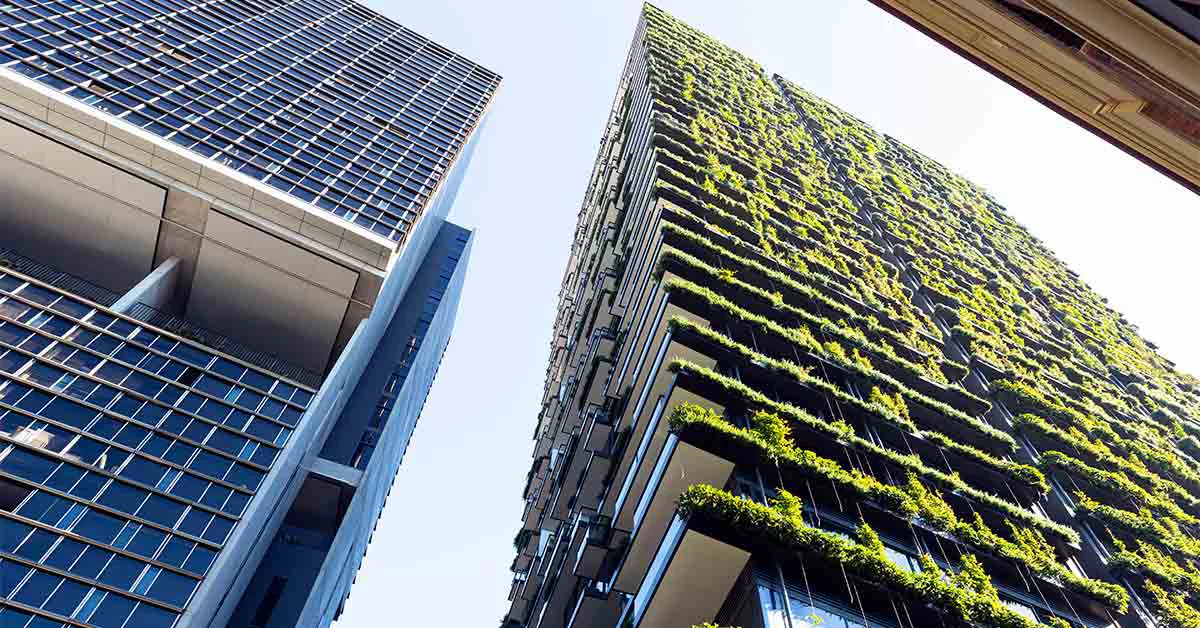
It is an established headline – real estate is one of the single biggest carbon-emitters globally. Consensus generally positions real estate’s impact on the environment at 40 per cent of global carbon emissions. Some estimates now claim that up to 60 per cent of carbon emissions in cities are attributable to the built environment. Either way, it is correctly placing the sustainability conversation as a vital aspect of the built environment.
While new builds can be designed to be environmentally efficient, they often come at a heavy environmental cost during the construction phase. But when it comes to boosting the supply of green buildings and accelerating the decarbonisation of real estate, it is retrofitting – investing in older buildings to meet both regulations and market expectations – that offers the most potential. And this is a conversation that needs to be front and centre for all stakeholders.
With 80 per cent of buildings in mature cities set to still be in use in 2050, the focus must be on addressing the existing stock through retrofitting to achieve net-zero carbon ambitions. This means we need to retrofit 3 to 3.5 per cent of existing buildings every year to meet global net-zero targets. But current retrofitting rates are only around 1 per cent, meaning that the pace needs to at least triple.
The real estate industry must rebalance its efforts from new construction to seeing retrofitting as a brighter way to tackle the decarbonisation of the built environment. In a JLL survey of 340 sustainability leaders in the Asia-Pacific, 63 per cent agreed that a significant part of the real estate industry’s future work should be retrofitting legacy buildings to become net zero.
Sustainability credentials, along with location and rental cost, constitute the top three leasing criteria for corporate real estate (CRE) leaders today. Owing to their carbon commitments, large corporates are factoring green criteria into their decision-making when leasing commercial real estate. JLL research also shows that one-third of CRE leaders plan to exit less carbon-efficient spaces by 2025, and this number is likely to increase in the future.
Becoming non-negotiable
Meanwhile, seven in 10 CRE leaders in the Asia-Pacific say that they would be willing to pay a premium to lease a green certified building. Leasing spaces in green and sustainable buildings is becoming a non-negotiable for occupiers, and this alone should motivate landlords to consider retrofitting as well as avoiding brown discounts – where the value of a building without green credentials falls because it is unable to meet a tenant’s low-carbon targets – in the future. The acute shortage of green buildings and huge occupier demand for the same present a tremendous opportunity for early adopters of retrofitting.
The need to decarbonise buildings is clear, and so are the actions needed to achieve this goal. Maximising operational efficiencies, electrifying heat, incorporating on-site renewable energy, and sourcing off-site local renewable energy are key steps in this process. Rising energy costs and net-zero commitments are driving the energy retrofits in the built sector. The top five retrofitting priorities today, as identified by JLL research, are related to the energy-efficiency agenda.
However, retrofitting buildings for decarbonisation is a complex process, and owners must take a holistic, long-term view for it to be successful. This means considering not just the immediate operational benefits, but also the financial, environmental and social impacts of the retrofitting project.
A well-designed and executed project can deliver significant benefits to building owners, tenants and the environment, making retrofitting a wise investment in the long term. Retrofitting must also go beyond carbon to meet wider sustainability goals. Retrofits are both more viable and responsible when considered in tandem with broader asset repositioning that responds to changing workplace dynamics, health and well-being needs, social impact, biodiversity and climate resilience.
Stakes getting higher
One of the critical steps in accelerating the pace of retrofitting is to address the knowledge gap. This includes ensuring that building owners, contractors and workers have the necessary information, skills and tools to undertake retrofitting projects. This will require collaboration between government, industry and educational institutions to provide training and support.
In addition, scaling technology will be critical in accelerating the pace of retrofitting. This includes the development of innovative solutions for energy efficiency, the use of renewable energy sources, and the integration of smart building technology. These will help reduce the cost of retrofitting and make it more accessible to building owners.
The stakes are getting higher for assets that fall behind the sustainability curve. Risks of not acting range from brown discounts to more expensive financing for companies without robust decarbonisation plans.
We have a critical role to play within commercial real estate to have a meaningful and necessary impact on reducing global carbon emissions, and we can start right away. The technology, systems, processes and means to reach net-zero carbon and beyond exist today.
While there is no singular strategy, technology or entity that will address the journey, and neither is there a one-size-fits-all approach, retrofitting is a brighter and more intelligent way than focusing green ambitions purely on new builds. Effective decarbonisation of real estate requires a shift in mindset – away from needing to own or occupy the shiniest, amenity-laden new build on the block, and towards using clever design to reimagine an existing space that can still offer the same quality of environment and tenant experience as a new build.
While the scope and complexity of the challenge is immense, retrofitting existing buildings is the quickest and most cost-effective way to accelerate decarbonisation in the built environment.