Asia Pacific hotels: Realms in contrast
Insight
03 December 2024
Hotel Operators’ Sentiment Survey 2024-2025
Categories:

About the Survey
Launched in 2023, JLL’s Hotel Operators’ Sentiment Survey (HOSS) analyses sentiment from hotel General Managers on the year ahead to get a view ‘on the ground’ from an operations perspective. With uncertainties still lying ahead in the immediate/near term, collecting feedback from hotel operators themselves strengthens JLL’s understanding of the market, complementing our understanding of the dynamics from an investor perspective.
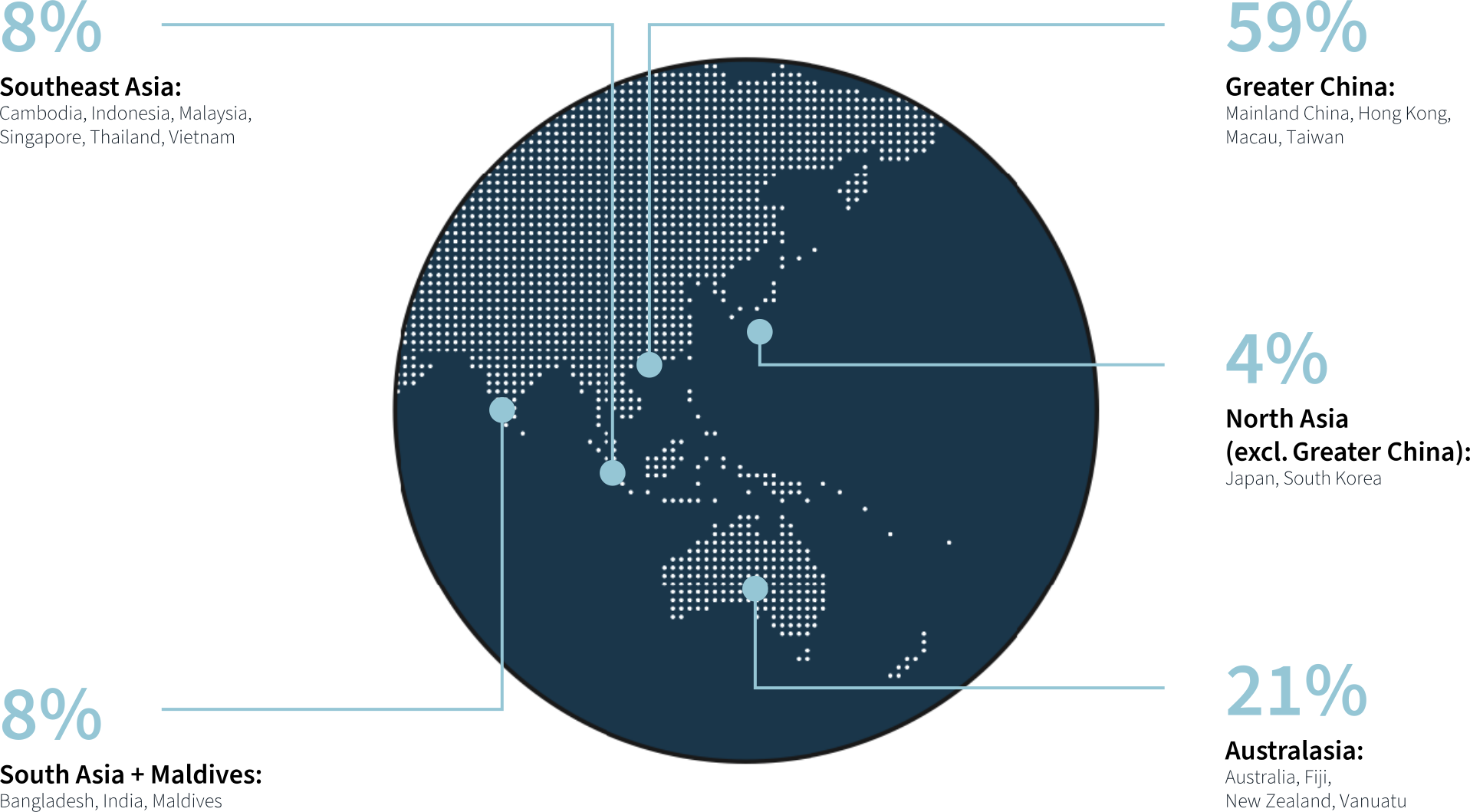
The 2024/2025 edition of HOSS is based on a total of 1,075 responses from hotels in Asia Pacific, across 20 countries. The survey was conducted in Q3 2024 and respondents were characterised as follows:
The Outlook in Context
Air capacity in the region continues to improve gradually, with international seat capacity increasing in tandem with demand yet still below 2019. However, domestic routes have met demand since the onset of the pandemic, bolstered by robust staycation business during lockdown periods.
As airlift continuously improves in the region throughout 2024, international tourist arrivals in Asia Pacific remained 15% below pre-pandemic levels as of YTD Sep 2024 based on the latest available data from UN Tourism. Tourism in Asia Pacific has however been evolving at different paces since the lifting of travel restrictions, closely linked to air connectivity and macroeconomic and geopolitical situations. In particular, North Asia lags behind other subregions due to Mainland China's current economic challenges. South Asia on the other hand shows stronger recovery, with arrivals only 6% below 2019 levels, followed by Southeast Asia, with tourist numbers 13% short of pre-pandemic figures.
Hotels in Asia Pacific continued to improve their top-line performance since the second half of 2023. The recovery of air routes supported rising occupancy rates, contributing to robust RevPAR increases and record-breaking Average Daily Rates (ADR). However, regional disparities are emerging, with some markets experiencing strong performance while others are seeing a taping of growth, and some are plateauing.
Trading performance trends in APAC as of YTD October 2024
Hotel trading performance: where to next?
HOSS 2024/2025 results reveal a divergence in recovery and growth prospects in Asia for 2024 and 2025. The region is divided into two primary categories: the ‘Outperforming markets’ (South Asia + Maldives, Southeast Asia, and North Asia), and the ‘Slow-growing markets’ (Australasia and Greater China). Notably, Greater China lags behind, forecasting a general decline in 2024 from its 2023 performance and a softer growth in 2025 than any other subregion.
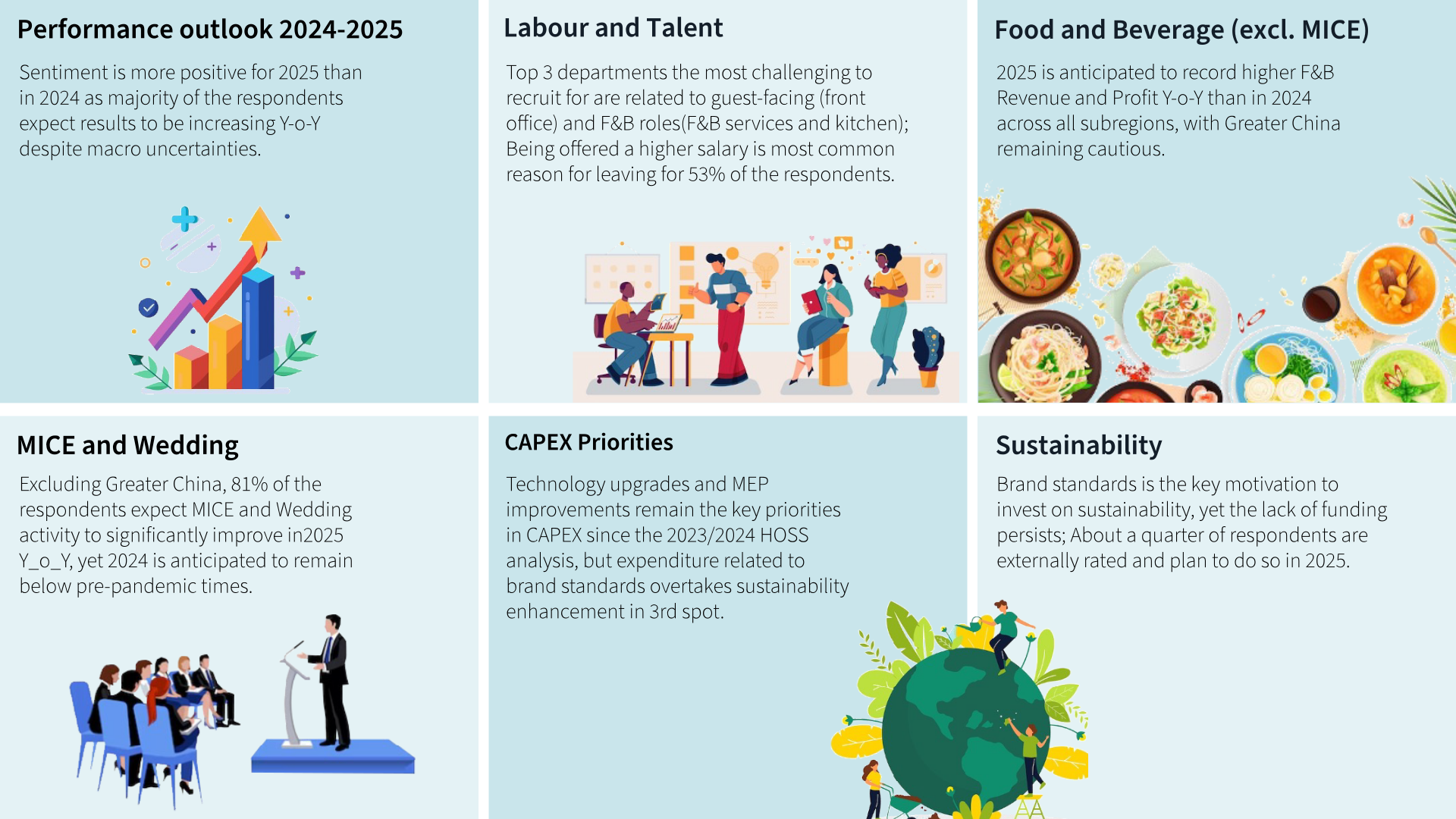
Sentiment in general is more positive for 2025 as a majority of respondents expect results to be increasing slightly Y-o-Y. Outperforming markets should remain leaders in 2025 with an anticipated continuation of momentum, while others are anticipating limited - yet certain growth - in both revenue and GOP.
5 picks for 2025
Amid post-pandemic recovery and current economic conditions, the hotel industry continues to tackle ongoing challenges:
Labour & Talent: Scarcity of talent persisting in Asia Pacific, with some nuances by subregion
Food & Beverage (excluding MICE): Light at the end of the tunnel with stable margin?
MICE & Weddings on standby
Implementing technology: A top priority in all aspect of hotel operations
Sustainability on the forefront
1. Labour & Talent: Scarcity of talent continues in Asia Pacific, with some variations by subregion
Labour dislocation in the hospitality industry through the pandemic has persisted in the first half 2024 in major markets in Asia Pacific. Relative to pre-pandemic time, respondents expect less headcount in 2025 and staff cost to be significantly higher, however in line with cumulative inflation since 2019. For most of the hoteliers, staff loss is mainly due to higher salary, whether it is within or outside the hospitality industry, a similar challenge found in Asia Pacific regardless of the industry and level of seniority. As labour has become even more salary and benefits sensitive given the ongoing macroeconomic uncertainties, hotels in Asia Pacific are finding it difficult to recruit for guest-facing roles (front office), and F&B related (F&B service and kitchen). Housekeeping is also another department where hotels, particularly in Australasia, Greater China and Southeast Asia, are struggling to recruit for.
In outperforming markets, the strong recovery in RevPAR vs. 2019 is primarily driven by high levels of ADR, even reaching record-highs for some markets, largely thanks to a favourable exchange rate against the US dollar. Looking ahead to 2025, we anticipate a shift towards occupancy-led growth in trading performance, as more tourists are expected to return. This potential surge may require an increase in operational staff, particularly in the housekeeping department, to effectively manage the stronger demand. Half of all hotels in these markets expect to employ more staff than they did before COVID-19, given a generally more optimistic outlook. As a result, 83% of respondents predict that staff costs will rise, reflecting both the anticipated increase in headcount and the current inflationary environment.
On the contrary, hotels in slow growing markets are forecasting to count less or the same level of headcount in 2025 as the outlook is anticipated to be less positive than elsewhere in the region, with the front office, kitchen and housekeeping the three departments which are challenging to recruit for.
Key priorities to consider:
Identify operational efficiencies in every department to continue the efforts made during the pandemic to maintain earlier efficiencies and find new ones, amidst labour pool shortage and rising costs. Benchmark against new industry averages to prioritise hiring efforts and look into the correlation to guest satisfaction to focus on increasing guest engagement where it matters most.
Reinvest in existing staff for training and upskilling to develop a multi-skilled workforce, especially with the young workforce more transient with less experience.
Review compensations, benefits and career planning for all to retain talent in the industry with creative incentive deployments.
Embrace and leverage technology as a way to supplement the existing manning level. Ensure that the customer journey is further enhanced through technology/AI especially for areas that can be automated.
2. Food & Beverage (excluding MICE): Light at the end of the tunnel with stable margin?
In Asia Pacific, Food & Beverage (F&B) results are anticipated to be lower than pre-pandemic times for most of the hotel respondents, despite the region now considered on par with Europe when it comes to dining offering and experience, according to the Future of Food report from the Luxury Group. Hotel sentiment on F&B results differs by subregion, with Greater China expecting significantly lesser activity than in 2019. South Asia + Maldives and Southeast Asia are generally more optimistic. 2025 is anticipated to record higher F&B Revenue and Profit Y-o-Y across all subregions, with Greater China remaining cautious. More hotels generally expect a Y-o-Y stabilisation from 2024, with margin anticipated to remain the same between 2024 and 2025.
Key priorities to consider:
Evaluate success on performance with outlet and meal period analysis in each outlet. For instance, is the outlet’s revenue growth driven by higher breakfast contribution (due to stronger occupancy yet typically of lower profitability) or does it encompass all meal periods?
Is the outlet optimising the space and seat utilisation?
Seats turnover by specific time period for lunch/dinner to consider staffing.
Consider different micro-concepts for different meal periods to explore improving space utilisation
Alternative usage – e.g. events, private dining space
Review current operations and evaluate the tactical promotions that are ROI-driven and profitable. Explore alternative operating models – collaboration/partnership/F&B operator & brand.
With inflationary pressure on the cost of goods and cost of living, menu optimisation while ensuring a value proposition, is essential to drive guest spending. Hotels should adopt a more commercial approach to formulating F&B strategies.
3. MICE & Weddings on standby
The MICE (Meetings, Incentives, Conferences, and Exhibitions) sector is set for a robust comeback, driven by a growing demand for creative and engaging experiences. As companies increasingly value in-person interactions, the industry is projected to experience substantial recovery and growth globally. The latest Skift report, "The State of Travel 2024", predicts strong global expansion for the MICE sector, with an estimated Compound Annual Growth Rate (CAGR) of 9% in market size (USD) from 2024 to 2032. Skift identifies key trends influencing Meetings and Incentive Travel in 2024, including remote work arrangements, AI adoption, environmental consciousness, political factors affecting events, and budget constraints. Looking closely at the survey’s results, challenges should persist on average in the region for the remainder of 2024, and well into 2025, although Asia Pacific hotels are generally more optimistic in the year ahead.
Majority of hotels in outperforming markets expect more activity in weddings, conferences and meetings than pre-pandemic times, whilst exhibitions are anticipated to remain the same as in 2019 for almost half of the hotels. Sentiment in slow growing markets is however more cautious, with one out of three hotels anticipating less activity in wedding, conference, exhibition, and meeting. However, conferences and meetings are expected to pick up throughout 2025.
Key priorities to consider:
Look at current existing venue utilisation and explore the type of additional space required should there be an opportunity.
Identify current under-utilised venues that can be re-purposed or reconfigured.
Re-think how venues and event packages are being put together and marketed.
Capture overseas wedding with higher profitability (size of the events in line with size of the hotel).
Personalisation of MICE events, and growing need for hybrid meeting models including relevant technology
Use of AI to present MICE space online to prospects.
4. Implementing technology: A top priority in all aspect of hotel operations
Hotels in Asia Pacific are displaying strong interest in technology investments for the year ahead as technology supports enhancements in hotel operations: improve efficiency in manpower, reduce energy and water consumption, as well as lessen waste. Ultimately, adopting technology seems to benefit the bottom line while operating hotels in a more efficient manner.
It is unsurprising that technology upgrades and Mechanical, Electrical and Plant (MEP) improvements remain the key priorities in CAPEX since the 2023/2024 HOSS analysis, but expenditure related to brand standards now surpasses sustainability enhancement to take the third position.
Key priorities to consider:
Asset preservation has become increasingly vital for older properties nearing or at the end of their asset’s physical lifecycle. Planning the optimal Capital Expenditure (CAPEX) spend for the next three to five years will assist in achieving the long-term objectives of the asset.
The perspective of the end-user is crucial, such as the ease of using the technology, its suitability for guest comfort, and its compatibility with mobile devices. Understanding the different requirements of the new generation travellers compared to traditional travellers.
Maximise the usage of data from the F&B booking/POS system along with newer, targeted F&B Revenue management platforms for a more targeted marketing campaign and data-driven decision making on cost/pricing. Consideration for AI-powered technology in both front-facing and back-end operations to improve processes and guest satisfaction.
Meeting sustainability and energy efficiency standards has become a non-negotiable aspect for participating in RFP programmes. Investing in mechanical, electrical, and plumbing systems not only ensures compliance with regulations and the USALI 12th edition, but also enables cost savings.
5. Sustainability at the forefront
Similar to the pressing need to embrace technology in hotel operations, implementing sustainability measures is now more than ever in hoteliers’ radar in Asia Pacific, especially since the recent release of the 12th edition of the USALI which includes metrics related to energy, water and waste. In addition, the growing scrutiny from owners, investors and financial institutions on sustainability and green actions are now more than ever encouraging hoteliers to put into actions their sustainability plans.
Brand standards in particular is the key motivation to invest on sustainability for most of the hotels in Asia Pacific, in line with CAPEX priorities, yet the lack of funding persists.
Additionally, about a quarter of respondents are externally rated and intend to do so in 2025, emphasising the significance of brand requirements, institutional pressure and financial backing similar to in Australasia and Southeast Asia. In Asia Pacific, sustainability reporting and data collection at the hotel level are the two priorities for 2025 regarding sustainability initiatives.
Key priorities to consider:
Focus on transition to new USALI standards to capture Energy Waste and Water data and use data for baselining.
More corporate businesses considering sustainability/ESG accreditation for RFP and as such hotels need to work towards meeting these new criteria.
ESG Legislations and stock exchange regulation in more advanced countries are expected to drive ESG data and climate risk transparency
Growing role of international operators in driving ESG requirements as brand standards.
Increasing scrutiny by buyers, lenders and investors in hotels of ESG standards should encourage owners to be on the front foot in their ESG credentials