Match your vision for business growth with a vision for your office. Here are 5 tips and hints to help you build a motivated team, efficient work processes, and an office where people really want to be.
24 September 2019
Guide
24 September 2019
5 Workplace Considerations as Your Business Grows
Categories:
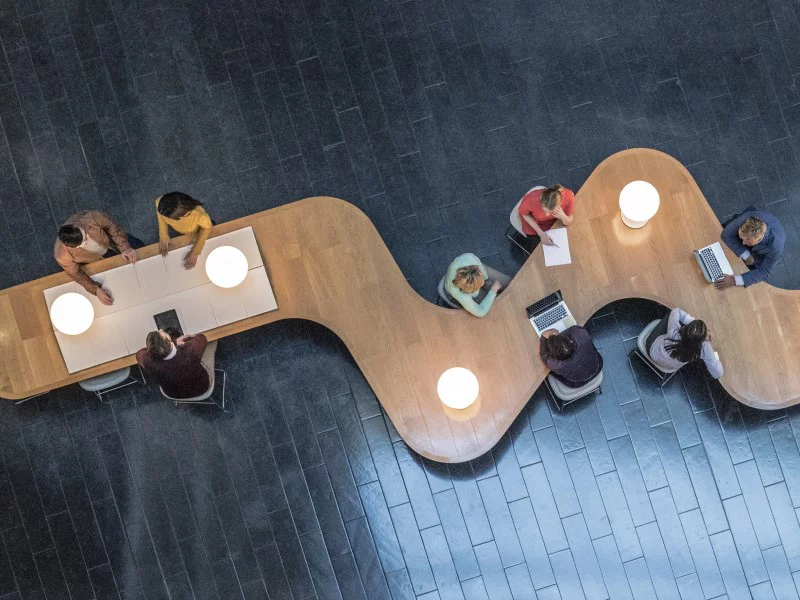
Your vision for your business is not just the values you operate by, or the language you use on your website, it’s also the space you operate in. Give your employees great space and they will be your most important brand ambassadors.
For owners and managers of growing businesses, this can be more easily said than done. When you are focused on driving sales, managing cost control, handling customer relations and building teams of people, it’s easy to overlook—or underestimate—the importance of the physical space you work in. But it’s important to remember that the workplace is a strategic tool for small and medium-sized enterprises (SMEs) to help recruit great people, build a motivated team, retain staff, and make work processes efficient.
“How are your people going to deliver the growth you envisage for your business, and how can you create the best workplace for them to do that? It’s not one you take off the shelf,” says JLL Australia’s design director for project and development services Anthony Walsh, “It’s important to take a human-centric approach to design and build services. Enlist the help of an expert who can workshop your ideas with you to help get a vision for your workplace that delivers to both your business and people goals.” That’s important for SMEs to grow and differentiate themselves in a market. The work environment is a key enabler of success, and it’s important to understand the needs and opportunities to transform your office, from inspiration through to execution and cost control.
Here are five considerations for a success office renovation
1. Think of your office as your most powerful tool to attract and keep talent
You will always compete with the big players and leaders in your industry for the best people. For many candidates, an energizing workspace with lots of amenities is an important factor in their decision about where they want to pursue their careers. By leveraging key trends, you can renovate your office to draw in talent, and bring to life the advantages of working at a growing, entrepreneurial firm.
Modern interior design, reception areas that are welcoming social places, gyms, chill out areas, and outdoor spaces are just a few of the office amenities that attract top talent, and enhance your team’s productivity and retention.
2. Take the time to deeply understand who the space is for and what they want and need before you start
Do your due diligence first. Start with the office location selection. If you’re looking at a completely new space, investigate what’s nearby that’s important to your employees. Is your new workplace close to a gym, top-tier restaurants and cafes?
When you walk around your office, do you see empty seats because you have salespeople out in the field or staff working from home? Depending on the nature of your team’s roles, you may be able to reduce the number of permanent seats and encourage a more agile working environment where people can choose the space that best suits the work they’re doing – whether it be a hush room to concentrate or a hub spot to collaborate. This may mean that even though your business is growing, you can occupy the same amount of space simply by better utilising what you have.
Determine what your employees or customers actually want and need before starting work on floorplans and look-and-feel specifications.
3. Create a workspace for multiple generations
Today we can have five generations working together in the same office. Younger employees are looking for flexibility and different ways of working, their work ethic is slightly different and a draw for them is a great office space. Gen Xers on the other hand may appreciate more areas for focus and reflection. The goal is not to ostracize anyone from the workplace environment.
You spend a lot of time in the office so you should build a great space that all your employees enjoy.
4. Invest in what’s important
There is no one-size-fits-all approach to fitting out your office space. A super funky workplace that works wonders for one business might be completely impractical for another. Whatever your vision for your business, there will be a solution for your budget. There are plenty of ways you can achieve that wow factor in the workplace without spending up big.
Start by assessing what your business really requires – do you need a fire-rated comms room for example, or a soundproof boardroom for confidential meetings? It’s important to invest in areas that support your core business and offer real value than some of the nice-to-have trends that, in reality, you can live without.
Office furniture is a good example. If you’re willing to forgo some of the brand prestige and customer service, you can buy well-built, sturdy workstations at a fraction of the cost of what a larger MNC would spend. The key is ensuring your builder has the buying power to select reputable suppliers that will deliver the quality and functionality you want and still stay within your budget.
5. Budget for hidden costs and unseen elements
When it comes to designing and building your office space, there are a lot of investments you can’t see, such as fire treatments and fire ratings, sound proofing, surface requirements and gas suppression systems, among others. You may need to invest in early warning systems rather than a sprinkler system for example, if you are a garment company and want to protect your inventory from fire/smoke/water damage.
These often unseen elements need to be considered in your design plans. It’s one thing to have a great looking office but it’s how it functions, performs and insures your most valuable assets as a business that is just as critical.
Conclusion
When it comes to creating your unique office space, it’s important that your design and build team understands your company values, your brand and what it is that’s driving the change. Has your business grown, do need to keep up with the competition or do you need a space that will help attract and retain the best talent? Whatever the reasons, adopting a human-centric approach and making sure you invest in the areas that will have the biggest impact on your business is key.
SMEs can leverage our full design, construction and project management capabilities to create truly inspirational spaces. We offer end-to-end design and build services, with a dedicated local team who will listen to your requirements, understand your business goals and deliver a fit out that transforms your office, all within your budget.