The way we use and think about space should be grounded in people.
17 July 2019
Guide
17 July 2019
Four things employees want from an office
Categories:
What will work—and the workplace—look like in 2, 5, 10 or even 20 years? While we can’t know for sure exactly where we’re going, we can explore the possibilities.
The way we buy, lease, design and use space will continue to shift in the future. Workplace needs will change as technology, economies and life as we know it evolves radically. But, the way we use space cannot be decoupled from the people in it. Strive to keep tailoring your space to your employees, their workstyles and their wants. Even, and especially, if you’re not exactly sure what they are. Below, see four stories on what employees want and how the workplace can and should shift to meet them.
1. Privacy (even in an open office)
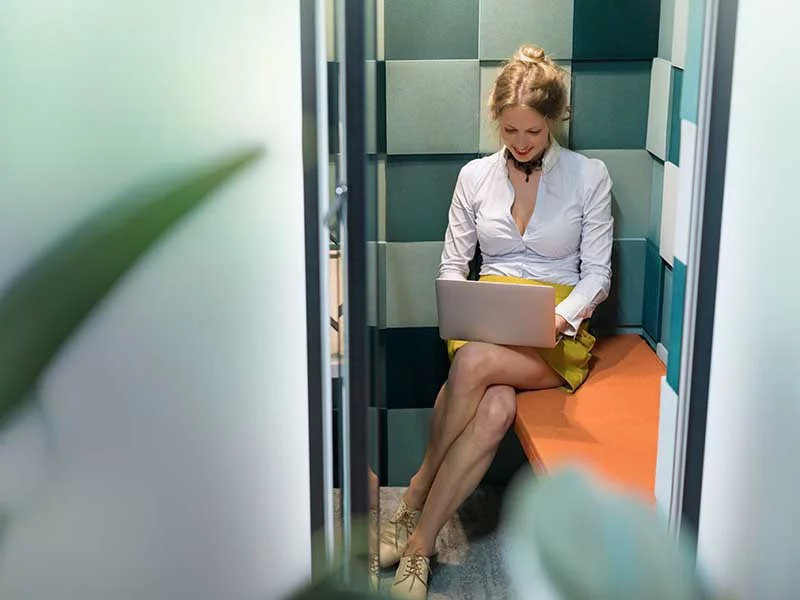
Open offices save on costs but skimp on privacy—and employee comfort as a result. Bringing privacy to open plan offices highlights that while open office design is meant to increase engagement, engagement “only flourishes when you have the choice to avoid it.” After riding the wave of open offices (and their ensuing crash), companies are realizing that balance is best. It’s about creating space that fosters a spectrum of experiences.
A well-designed space offers room to escape via an activity-based layout. And not only can employees work how and where they want, but they feel empowered by management to actually go there.
2. Limited visual distraction
In Why you can’t concentrate at work from the Wall Street Journal, Sue Shellenbarger talks visual noise—another issue with open office design. Once you find a quiet place to sit, activity visible in your periphery can still thwart concentration. Studies indicate this is a less-voiced complaint than privacy or excess sound, but just because your people don’t articulate the problem, doesn’t mean it should go unsolved.
If you have an activity-based office, help cut the visual clutter—and enhance your people’s productivity—by minimizing sight lines with plants, half walls, fabric panels and curved layouts.
3. Space designed with them in mind
Your workplace is for your people, right? So it stand to reason that more and more, HR is joining real estate conversations to help determine the best way to design space for the workforce. In a recent related seminar on workplace strategy, Ed Nolan (JLL’s Managing Director of Workplace Strategy) said factors like sick time, time to hire and retention rates are being considered along with dollars per square foot.
Additional takeaways from the event reinforced that workplace improvements (whether in sustainability, technology or flexible space) are ultimately about the employees.
4. Outside options to collaborate
Collaboration in the office is a must, and now more companies are understanding the value in connecting outside the workplace, too. The “premium” coworking trend has swept large organizations for a number of reasons. It caters to established professionals like business travelers, high-growth organizations that want to keep offices smaller for P&L reasons and innovative organizations that want to expose employees to outside entrepreneurs.
While startups have certainly pioneered the coworking trend to share space (and costs) with other entrepreneurs, the added interest from corporations has caused the shared office to become hotter than ever, with 1.2 million coworking. Coworking is just one piece of a larger trend toward creating space where people feel happy, healthy and connected—even if it’s from home or another office.
Stat of the month
9.2 million: The estimated number of workers in the gig economy by 2020 (as projected by Intuit). That’s up from 3.8 million in 2016. The rise has been fueled largely by startup contractors that work for on-demand delivery and service apps, but the trend is transcending industries. As Generation Z steps into the workforce and more employees launch “portfolio careers,” companies should ask themselves how the workplace can give flexible workers what they want.