Growing public transportation development elevating the maturity of new office clusters
24 March 2021
Insight
24 March 2021
Better connectivity for new office clusters in Shanghai
Categories:
Authors
Ian Zhou
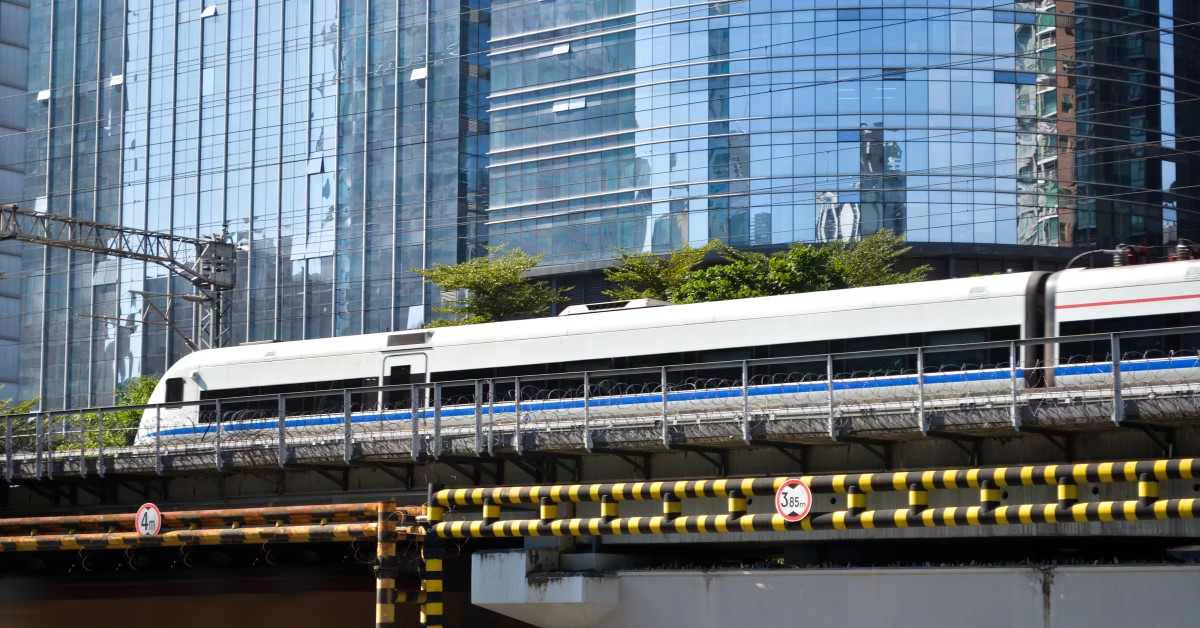
With continuous development, public transportation density in Shanghai’s decentralised area is gradually reaching the same level as that of the Central Business District (CBD). The metro lines in the decentralised area have been increasing rapidly for the past five years. According to JLL’s geographic information platform MapIT calculations, the total length of the metro within the decentralised area will soar to 329 km by the end of 2025, up from 230 km in 2020.
Figure 1: Total length of metro lines in Shanghai

Source: JLL Research
Continued improvement of building accessibility in the decentralised area
The new metro lines will bring stations closer to decentralised buildings, reducing the distance between buildings and stations. As shown in the figure below, metro lines connectivity for the Shanghai CBD is already mature, with the distance between stations averaging 400 metres. The newly completed metro lines will continue to enhance the commute experience as the level of traffic at interchange stations will decrease, thereby reducing congestion. The average distance between non-CBD buildings and metro stations will gradually shorten. More metro transportation makes commuting less painful for decentralised office buildings. Improved accessibility attracts more tenants to move to the decentralised area.
The relocation and consolidation of tenants to the decentralised area and the completion of new projects have created a clustering effect, bringing new momentum to the district. The average distance from office buildings in the decentralised area to the nearest metro station has reduced from 628 meters to 491 meters, nearly 22% over the past five years. We have observed a significant number of corporate relocations and consolidations to high-quality new buildings in the decentralised area during this period.
By 2025, we expect the average distance to be further reduced to 456 metres, closing the gap with the CBD. The trend of polycentric development and decentralisation will deepen, and the decentralised area will become increasingly mature.
Figure 2: Average distance between office buildings and metro station in Shanghai

Source: JLL Research
New metro lines enhance regional connectivity
Shanghai has the longest metro network in the world. Convenient transportation contributes to the city’s polycentric development model, improving the commute time between submarkets and enhancing the efficiency of various economic activities. For example, Line 15, which completed in January 2021, connects Line 9 and Line 12 in Caohejing, providing a convenient solution for an interchange. The new metro lines will shorten not only the interchange time but also the commute time between submarkets. More lines will be completed in Shanghai in the next five years.
As shown in the figure below, we calculated the current travel time via public transport and the future travel time that would improve when Line 14, 18 and 19 are open, based on the GIS. There is a potential for improvement in almost every submarket, which will then be more attractive to tenants due to faster access. In particular, the travel time between the North Bund and Lujiazui will be reduced to less than 10 minutes, which will enhance the positioning of the North Bund as a financial and logistics & shipping centre and make it a more solid "golden triangle" with the Bund and Lujiazui submarkets.
Figure 3: Improvement in commuting time between key submarkets along metro lines 14, 18 and 19 after completion

Source: JLL Research